
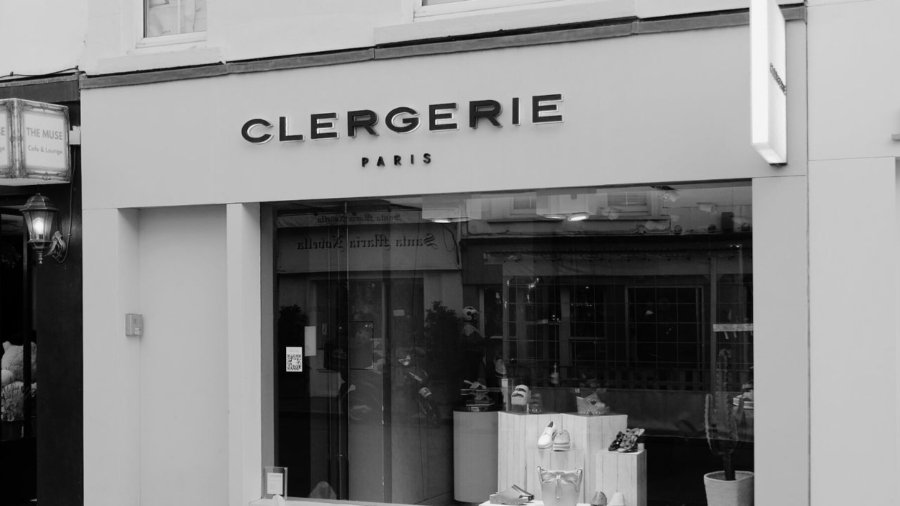
In April 2025, the commercial court in Romans-sur-Isère issued a final liquidation order for Clergerie. The corporate entities behind the brand were officially wound up, and around 50 employees faced redundancy. But weeks later, the Clergerie name was sold to a Spanish company called Petrel 92 SL.
So is Clergerie going out of business? The honest answer is: the company that made and sold the shoes is gone, but the brand itself has been acquired and may continue in some form. Here’s a clear account of what happened, in order, and what it means in practice.
What Clergerie Is and Why It Matters
Clergerie was founded by French designer Robert Clergerie. The brand built its reputation on architectural heels, bold platforms, and a strong commitment to making shoes in France. At its peak, it operated 21 stores worldwide and sat firmly in the upper tier of European footwear.
The production base was a factory in Romans-sur-Isère, a town in southeastern France with a long history in shoe manufacturing. Local press described Clergerie as the “last flagship of luxury footwear” in the town — which gives you a sense of what the closure meant beyond just one company.
This was not a large business by any standard measure. At the time of liquidation, around 50 people worked across the brand’s production and commercial operations. But it carried real weight as a symbol of French craft manufacturing.
The Financial Collapse — A Step-by-Step Timeline
Clergerie’s decline happened in stages over roughly 13 months. Each stage is a recognizable step in French insolvency law, and understanding the sequence helps explain why the outcome was never straightforward.
March 2024: First Signs of Serious Trouble
On March 29, 2024, the Paris Commercial Court placed Clergerie under court protection. This is the first formal step in French insolvency proceedings — it creates a legal shield around the business while its finances are examined. At this point, reported debts were around €1 million, and the court gave the company an observation period to assess whether recovery was possible.
December 2024: Formal Rehabilitation Proceedings
By December 2, 2024, the situation had worsened significantly. The company was placed in redressement judiciaire — court-supervised rehabilitation. This happened because Clergerie had ceased payments, meaning it could no longer meet its financial obligations. The debts had grown substantially: approximately €7 million owed by SSB, the production company, and €1.5 million owed by JHJ, the commercial entity.
March 2025: Liquidation Begins
On March 11, 2025, the Romans-sur-Isère trade court placed Clergerie in liquidation as a going concern. The factory was permitted to keep operating until April 25, 2025. A deadline of March 18 was set for potential buyers to submit offers.
April 2025: Final Liquidation Order
On April 8, 2025, the commercial court issued its final judicial liquidation ruling. Both SSB and JHJ were officially liquidated. This ended the corporate structure behind Clergerie as it had existed, and triggered redundancies for approximately 50 workers.
What “Liquidation as a Going Concern” Actually Means
French insolvency terminology can be confusing if you’re not familiar with it. Here’s a plain-language breakdown of the key terms used in Clergerie’s case.
Redressement judiciaire is court-supervised restructuring. The business keeps trading while a court-appointed administrator looks for a recovery plan or a buyer. It’s designed to give companies a window to survive, not an immediate shutdown.
Liquidation judiciaire as a going concern means the business is being wound down, but continues operating temporarily. Think of it like a store that announces it’s closing, but keeps the lights on for a few more weeks to sell remaining stock and give a potential buyer a chance to step in. That’s exactly what happened in Romans-sur-Isère — the factory stayed open after the March ruling, with a hard stop set for April 25, 2025.
Cessation de paiements — ceasing payments — is the trigger for these proceedings. It simply means the company could no longer pay what it owed when it was due. That’s the moment French law requires a formal process to begin.
One important distinction: SSB and JHJ, the corporate entities that ran Clergerie’s operations, were liquidated. But the brand name — Clergerie Paris — is a separate asset. It can be sold independently, which is exactly what happened.
The Factory, the Employees, and the Local Impact
SSB operated the production facility in Romans-sur-Isère. JHJ handled the commercial side — sales, stores, and distribution. When both were liquidated in April 2025, around 50 people were left without jobs.
For the town of Romans-sur-Isère, this mattered beyond the headcount. The area has a deep history in French shoe manufacturing, and Clergerie had been described as its last major luxury footwear operation. Losing it marks a symbolic end to an industrial tradition that once defined the region.
The factory had been allowed to keep running after the March 2025 liquidation ruling, partly to allow for an orderly wind-down and partly to leave a window open for a buyer. French media reported clearance sales taking place in April 2025 as remaining stock was moved.
The Sale to Petrel 92 SL — What We Know
In May 2025, the Clergerie Paris brand was sold to Petrel 92 SL, a Spanish company. The sale came after the corporate liquidation — meaning the buyer acquired the brand name and associated assets, not the operating businesses that had been wound up.
The employee situation created immediate friction. The initial court ruling required the buyer to maintain all existing work contracts. But according to FashionNetwork, Petrel 92 SL indicated it intended to keep only around 14 of the approximately 50 staff. That gap — between what the ruling required and what the buyer planned — left workers in a difficult and uncertain position.
Beyond the staffing dispute, details about Petrel 92 SL’s plans for Clergerie are limited. There’s no confirmed information yet about where production will take place, whether the Romans-sur-Isère facility will play any role, or how many stores will remain. Anyone who tells you they know exactly what Clergerie will look like under its new owner is speculating.
Why Did This Happen? The Broader Context
Clergerie had already gone through a significant ownership change before things fell apart. In 2020, French Legacy Group acquired the brand and attempted a relaunch. According to WWD, that effort did not gain sufficient traction. French Legacy Group stated publicly that they had no intention of abandoning the brand, but the insolvency proceedings went ahead regardless.
The underlying pressures were not unusual for a mid-size heritage brand. Manufacturing in France is expensive. The brand needed strong international distribution and a credible digital presence to justify its price points. Neither came together in a way that made the numbers work.
Add pandemic disruption, inflation, and shifting consumer spending in the post-2020 period, and you have a difficult environment for any niche luxury brand operating with thin margins and high fixed costs. Clergerie was not uniquely mismanaged — it was caught in conditions that exposed the fragility of its business model.
For business owners and managers tracking similar situations, resources like KeyBusinessGoal cover how companies navigate financial distress and ownership transitions in practical terms.
What This Means for Anyone Who Cares About Clergerie
If you’re a customer, retailer, or someone who followed the brand, here’s the practical summary:
- The original operating companies (SSB and JHJ) have been fully liquidated.
- The Clergerie Paris brand was sold to Petrel 92 SL in May 2025.
- Future collections, availability, and quality depend entirely on what the new owner decides to do — and that remains unclear.
- Most of the original workforce will not carry over to the new entity.
- Production in Romans-sur-Isère has effectively ended under the previous structure.
The brand name survives on paper. Whether the product, the craft, and the identity survive alongside it is a different question — and one that only time will answer.
Final Takeaway
Clergerie as a company is gone. The corporate entities were liquidated, the factory stopped operating, and dozens of workers lost their jobs. That part is definitive.
But the Clergerie name has been purchased by a new owner, which means the brand has a chance — however uncertain — of continuing in some form. What that looks like under Petrel 92 SL is still unknown. The honest answer to “is Clergerie going out of business?” is that the business that built it has ended, but the name has been given a second life whose outcome is not yet clear.
For anyone watching this space, the next 12 months will show whether the acquisition produces a genuine continuation of the brand or simply a label attached to a different product under a different strategy.
Also Read: